What Is Lactate Threshold Testing and Why It Matters for High School Runners
Most youth athletes train by feel. We use data.

Here's what that actually looks like on the track. The athlete runs a series of efforts that get progressively harder. We track heart rate and pace the whole time. Every few minutes, we stop and take a tiny blood sample from the fingertip. It takes about five seconds. That sample tells us the lactate level in the blood right then and there.
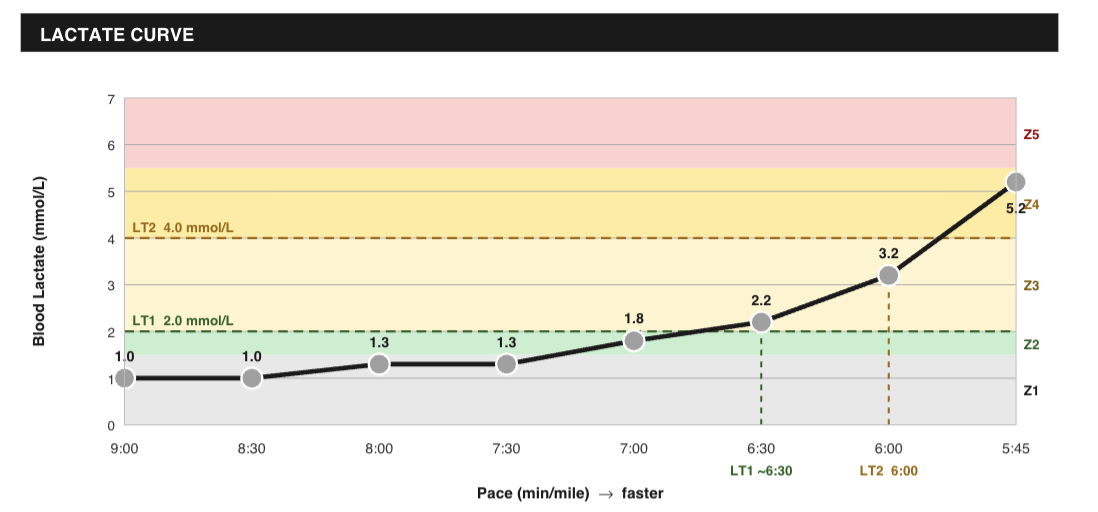
By the end of the test, we have a curve. From that curve, we pull out two numbers. Those two numbers are the foundation of everything we do in training.
LT1: The Base of Everything
The first number is Lactate Level 1, or LT1. This is the point where lactate first starts to build up in the blood. It's the intensity where your body shifts from running completely aerobically to starting to accumulate a little fatigue.
LT1 is your aerobic sweet spot. Training at this intensity is how you build a big, durable aerobic engine without grinding your body down. This is where your easy runs, long runs, and recovery days should live. Most athletes run those efforts too hard because nothing is telling them to back off. Once you know your LT1, easy days are actually easy. That means faster recovery, more volume, and fewer breakdowns over the course of a season.
LT2: Your True Threshold
The second number is Lactate Level 2, or LT2. This is the highest effort your body can sustain before lactate starts accumulating faster than you can clear it. It's your real threshold.
Most coaches call this tempo pace. But without testing, tempo pace is just a guess. One runner's LT2 might be a 6:30 mile. Another's might be a 7:10. If you're running both athletes at the same pace, one of them is working too hard and one isn't working hard enough. The test removes the guesswork entirely.
What We Do With the Numbers
Once we have both numbers, we build your training zones around them. LT1 anchors your easy work. LT2 anchors your quality work. Everything in between has a purpose and a pace range attached to it.
Your long runs are building the right system. Your tempo workouts are hitting the right intensity. Your recovery days are actually recovering you. And when it's time to peak for sectionals and state, we know exactly what the final weeks of training need to look like. We're not guessing. We have the data.
There's also something that happens when athletes go through this process that I think is just as valuable as the numbers themselves. They start to understand their own bodies. They stop guessing how hard "hard" should feel. They know. That knowledge carries with them for the rest of their athletic career.
This Isn't Just for Elite Runners
I use lactate threshold testing with middle school athletes, high school cross country and track runners, adult marathoners, and post-collegiate competitors. The physiology is the same regardless of level. What changes is what we do with the information.
For a high school runner, the benefits are straightforward: more training volume without breaking down, fewer injuries because easy days are genuinely easy, and a sharper peak when the postseason arrives because we built toward it with the right data from the start.
If you've been putting in the work and not seeing the results you expected, the issue usually isn't effort. It's the absence of the right information. That's exactly what testing is built to fix.
Reach out if you want to learn more about whether lactate threshold testing makes sense for your athlete. It's one of the most useful tools I have, and it's a lot simpler than most people expect.
Coach Justin